The Wrestle
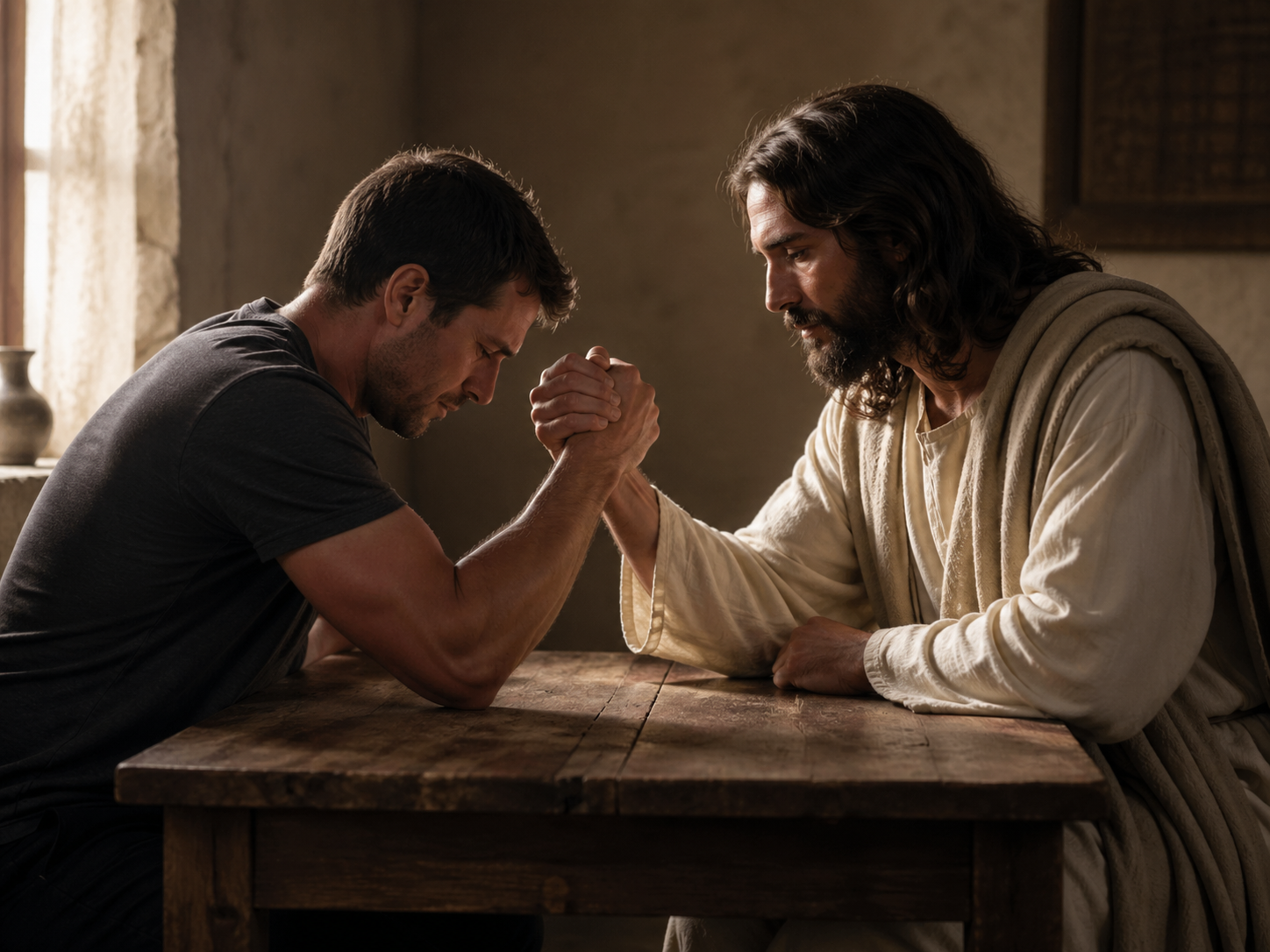
There’s a subtle invitation here: not to avoid the wrestling, but to remain present in it. To stop measuring faith by how steady we feel and begin recognizing it in how we continue to turn toward God, even when we’re unsure.
-
In the quiet of the morning, I’m still holding questions
Coffee growing cold beside an open page
I thought faith would feel like steady ground beneath me
But it feels like reaching through the hazeI don’t have the answers I was hoping for
But I’m still here, and You’re still nearSo I’ll hold on through the night
Even when I don’t see light
Grace is meeting me right here
In the middle of my fear
If Your strength is in my weak
Then I don’t have to be complete
I will trust what I can’t see
Your grace is enough for meThere are moments when the silence feels like distance
When every prayer just echoes back again
But I remember You don’t turn away from wrestling
You stay with me until the endEven in the tension I don’t understand
You’re shaping more than I have plannedNot in the answers, not in control
But in surrender, You make me whole
Not in the striving, not in my might
But in the staying through the nightI will hold on through the night
Even when I don’t see light
Grace is meeting me right here
In the middle of my fear
If Your strength is in my weak
Then I don’t have to be complete
I will trust what I can’t see
Your grace is enough for me goes here
I’m noticing how quickly my confidence in God can feel steady one day and strained the next, especially when circumstances don’t resolve the way I hoped. In those moments, faith feels less like certainty and more like quiet endurance.
“So Jacob was left alone, and a man wrestled with him till daybreak.” — Genesis 32:24 “But he said to me, ‘My grace is sufficient for you, for my power is made perfect in weakness.’” — 2 Corinthians 12:9
Jacob’s story doesn’t hide the tension. He wrestles through the night, not walking away unchanged but marked—both wounded and blessed. It’s a picture of what faith often becomes in real life. Not a straight path of clarity, but a long holding-on when answers don’t come quickly. The struggle itself becomes the place where God meets him.
Paul speaks from a different kind of struggle, one that doesn’t get removed. Instead, he hears that grace will be enough within it. That shifts the expectation. Faith isn’t always about resolution; sometimes it’s about remaining—learning that God’s strength settles into the very places we feel weakest.
We often assume that strong faith means unshaken confidence. But Scripture shows something quieter and more honest. Faith can look like staying in the tension, continuing to trust when clarity is absent, and allowing God to reshape us in the process. This isn’t self-improvement; it’s surrender. And surrender rarely feels clean or easy.
Ask Yourself: Where am I being invited to trust God within the tension rather than trying to resolve it on my own?